
Keeping pigs on small acreage offers potential for efficient meat production, land improvement, and supplementary farm income, but demands more planning, infrastructure, and daily management than most backyard livestock. Pigs grow rapidly, convert feed efficiently, and adapt to various systems, yet they also test fences relentlessly, create substantial environmental impact, and operate under strict regulations that many small landholders underestimate. This guide examines the practical realities of raising pigs on small farms across Australia, covering legal requirements, actual costs, labour demands, and profitability considerations to help you determine whether pigs suit your property, schedule, and goals.
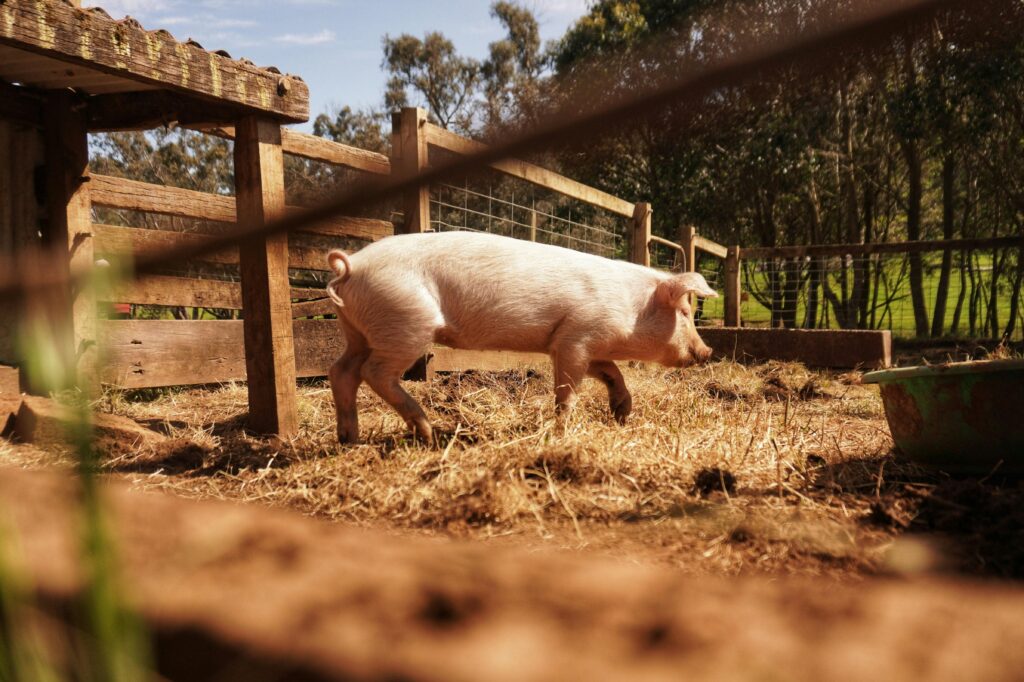
Is Keeping Pigs Suitable for Small Acreage?
Pigs are intelligent, curious, and physically powerful animals that reward disciplined management but punish poor planning severely. They root instinctively, turning pasture into bare ground within weeks if not managed carefully. They test every fence weakness and escape through gaps that would contain cattle or sheep. They grow from 1.5-kilogram weaners to 100-kilogram market weight in five to six months, demanding escalating feed quantities throughout that period.
Small acreage pig keeping succeeds when owners understand pigs are a system requiring coordinated infrastructure, feed supply, time allocation, and exit planning rather than just livestock you feed daily. Pigs create more mess, noise, and neighbour impact than chickens, sheep, or goats. They demand daily attention without the forgiveness that grazing animals offer when schedules slip.
The appeal of pigs lies in their feed conversion efficiency, rapid growth, and high-value end product. Pigs convert feed to meat more efficiently than cattle, sheep, or poultry. A single pig produces 60 to 80 kilograms of quality pork in six months from weaning to processing. Small-scale direct sales can return premium prices unavailable through conventional livestock channels.
However, pigs are not suitable for every small farm. Properties lacking secure fencing, reliable water, adequate drainage, or council approval will fail regardless of enthusiasm. Owners unable to commit daily time, manage processing logistics, or tolerate substantial mess should choose different livestock.
Legal and Council Regulations in Australia
Pig keeping operates under layered regulation covering biosecurity, animal welfare, environmental protection, and land use planning. Understanding requirements before acquiring pigs prevents expensive compliance failures.
State Versus Council Rules
State regulations establish minimum animal welfare standards, biosecurity requirements, and food safety frameworks. These rules apply uniformly but enforcement and interpretation vary by local authority.
Council regulations control where pigs can be kept through zoning, animal limits, setback distances from boundaries and dwellings, and environmental management conditions. A property zoned rural may allow unlimited pigs while rural residential zoning might prohibit them entirely or limit numbers to two or three. Many councils require development approval for pig keeping exceeding hobby scale.
Setback distances prevent nuisance to neighbours. Common requirements mandate pig housing sit 50 to 100 metres from neighbouring dwellings and 10 to 20 metres from property boundaries. These distances make pig keeping impossible on blocks under one hectare in many councils.
Neighbour complaints trigger enforcement even where operations technically comply with regulations. Odour, noise, and flies from poorly managed pig systems create justifiable grievances that councils must address. Maintaining good relationships through communication, proper waste management, and minimising impact matters as much as formal compliance.
Biosecurity and Identification
All Australian pig keepers must register with their state’s biosecurity authority and obtain a Property Identification Code (PIC). Registration is free in some states for non-commercial operations but may incur fees in others (typically $50 to $105 depending on state and commercial status). PIC numbers are mandatory even for single backyard pigs kept for personal consumption and enable disease control responses through animal movement tracking.
Movement documentation records all pig movements on and off properties. These records support traceability during disease investigations and maintain Australia’s biosecurity status. Requirements apply regardless of scale or purpose.
Feed restrictions prohibit feeding pigs food waste containing or potentially contaminated with meat products. These rules prevent exotic disease introduction, particularly African swine fever. Commercial pig feed, grain, vegetables, and dairy products remain acceptable. Home food scraps containing meat require treatment through approved processes most small holders cannot access.
Check specific requirements with your state’s primary industries department before starting. Regulations change, enforcement varies, and ignorance provides no defence during investigations.
Land Size and Stocking Density for Keeping Pigs
Pigs damage land faster than any common livestock through rooting behaviour and concentrated traffic patterns. Understanding realistic stocking limits prevents environmental degradation and compliance issues.
A single growing pig needs minimum 10 to 20 square metres of hard-standing yard space or 50 to 100 square metres of rotational paddock depending on management system. These figures assume proper drainage, feeding areas, and shelter rather than open dirt lots.
Small properties under two hectares realistically support two to six growing pigs at a time using intensive yard systems with concrete or compacted bases. Larger blocks from two to five hectares can manage 8 to 15 pigs using rotational paddocks that recover between grazing cycles.
Pigs concentrate activity around feed, water, and shelter points. These areas turn to mud rapidly regardless of initial condition. Effective drainage, hard-standing surfaces, or thick vegetation buffers prevent mud spreading across entire enclosures.
Continuous grazing destroys pasture through rooting and selective grazing. Pigs dig for roots, insects, and tubers, removing vegetation and creating bare patches that erode during rain. Even light stocking creates substantial impact without rest periods.
Yard Systems Versus Rotational Paddocks
Yard systems confine pigs to permanent enclosures with concrete or compacted gravel bases that withstand rooting. These systems minimise land damage, simplify feeding and cleaning, and allow higher densities on limited space. They demand more infrastructure investment but deliver predictable outcomes.
Rotational paddocks move pigs through fenced sections, allowing previous areas to recover before reuse. This system spreads environmental impact and provides forage supplementing purchased feed. It requires more land, more fencing, and careful timing to prevent permanent damage. Paddock systems work better on properties exceeding three hectares where infrastructure costs per pig decrease.
Both systems succeed when properly designed. Yard systems suit smaller properties prioritising containment and management simplicity. Paddock systems suit larger properties accepting higher infrastructure costs for lower environmental impact and feed cost reduction.
Housing Requirements for Keeping Pigs
Pigs need shelter from weather extremes, predators, and stress regardless of system type. Adequate housing affects growth rates, health outcomes, and mortality rates significantly.
Shelter, Shade, and Weather Protection
Pigs lack sweat glands and suffer heat stress in Australian summers. Temperatures exceeding 30°C slow growth and can cause death without adequate shade and water. Shelter structures need substantial shaded areas with good airflow. Shade cloth alone often proves inadequate during heatwaves.
Wallows (mud pits) help pigs regulate temperature naturally. A simple wallow created by providing water in a depressed area allows cooling through evaporation. Clean water for drinking must remain separate from wallow water.
Cold tolerance varies by age. Young pigs need warm, dry bedding and draft-free shelter. Adult pigs tolerate cold better but still require dry sleeping areas protected from wind and rain. Wet, cold conditions increase disease pressure and reduce feed conversion efficiency.
Drainage determines whether housing remains functional or becomes a mud pit. Site shelters on slight slopes with surface water directed away from sleeping and feeding areas. Compacted gravel, concrete, or thick bedding over well-drained soil all work better than bare clay that retains water.
Fencing and Containment
Pigs test fences continuously, using intelligence and strength to exploit weaknesses. Effective pig fencing either physically prevents escape or delivers enough deterrence that pigs stop testing.
Electric fencing provides the most cost-effective containment for paddock systems. Two to three strands of electric wire at 20cm, 40cm, and 60cm heights contain pigs effectively once they learn to respect the shock. Young pigs need training near secure fencing before moving to electric-only boundaries. Electric systems fail during power outages or when vegetation shorts wires, requiring daily checks.
Wire mesh fencing (pig netting) with posts every three metres and bottom wire buried or secured prevents physical escape. Heights of 90cm to 120cm stop most pigs climbing or jumping. Mesh fencing costs $4,000 to $8,000 per kilometre installed but provides reliable long-term containment.
Permanent post-and-rail or post-and-panel fencing offers maximum security but costs substantially more. These systems suit permanent yards near dwellings where escape risks property or people.
Gates need to be strong, gap-free, and properly secured. Pigs open simple latches, lift gates off hinges, and push through loose fittings. Use robust hasps, chains, or clips that resist determined manipulation.
Pig Feed Requirements and Ongoing Costs
Feed represents the largest ongoing cost in pig production, determining profitability more than any other factor.
Commercial Feed Versus Mixed Diets
Commercial pig feed provides balanced nutrition supporting optimal growth rates and health outcomes. Grower pellets cost $500 to $700 per tonne delivered. Finisher rations cost slightly less at $450 to $650 per tonne. Quality commercial feed delivers consistent results without guesswork.
A single pig from 20-kilogram weaner to 100-kilogram market weight consumes approximately 250 to 300 kilograms of feed over five to six months. At current prices, this represents $150 to $200 in feed costs per pig. This figure establishes the baseline that alternative feeding must improve upon.
Mixed diets combining commercial feed with grain, vegetables, dairy products, or pasture can reduce costs but demand more labour and nutritional knowledge. Pigs need balanced protein, energy, vitamins, and minerals for optimal growth. Deficiencies slow growth, increase mortality, and sometimes cause permanent health damage.
Kitchen scraps, garden waste, and crop surplus provide supplements but rarely form complete diets. Remember meat-containing scraps are prohibited. Vegetable matter alone lacks protein and energy density pigs need for efficient growth.
Growth Stages and Feed Demand
Weaner stage (20 to 40 kilograms): Young pigs consume 1 to 1.5 kilograms daily of high-protein starter rations. This stage lasts three to four weeks and costs $25 to $40 per pig in commercial feed.
Grower stage (40 to 70 kilograms): Pigs eat 2 to 3 kilograms daily of grower pellets. This stage spans six to eight weeks and costs $70 to $100 per pig in feed.
Finisher stage (70 to 100 kilograms): Feed consumption reaches 3 to 4 kilograms daily. This final stage before processing lasts four to six weeks and costs $50 to $70 per pig.
These figures assume optimal nutrition supporting rapid growth. Slower growth from poor-quality feed extends time to market weight, increasing total feed costs and delaying sale income. Cheap feed often costs more through inefficiency than quality feed costs through higher prices.
Water consumption scales with feed intake and temperature. Pigs drink 5 to 10 litres daily in moderate conditions, increasing to 15 to 20 litres during heat. Reliable water supply is non-negotiable.
Labour and Daily Management in Pig Keeping
Pigs demand consistent daily attention and cannot be left for weekends without arrangements. Understanding realistic time requirements prevents burnout and neglect.
Daily tasks consume 20 to 40 minutes per day for small numbers (two to six pigs). Feeding takes 10 to 15 minutes including feed preparation and trough management. Water checks and refilling add five to ten minutes. Visual health checks and behaviour observation require five minutes. Cleaning feeding areas and removing manure from high-traffic zones takes five to ten minutes.
Weekly tasks add another one to two hours. Fence inspection and repair prevent escapes. Shelter bedding changes maintain hygiene and comfort. Wallow maintenance ensures cooling capacity. These tasks cannot be deferred without consequences.
Growth monitoring through observation and occasional weighing guides feeding adjustments and processing timing. Pigs ready for processing should not be held beyond optimal weight as feed costs continue without proportional value increase.
Behavioural management matters more with pigs than with sheep or chickens. Bored pigs develop destructive behaviours, test fences aggressively, and sometimes injure each other. Providing enrichment through varied environments, rooting materials, or hanging objects reduces problem behaviours.
Emergency capacity must exist for injury treatment, escape containment, or facility repair. Pigs create urgent problems that cannot wait until convenient. Properties lacking backup plans or flexible schedules struggle with pig keeping.
Compared to chickens requiring 10 minutes daily, sheep needing 15 minutes weekly, or goats demanding 30 minutes daily, pigs sit in the high-maintenance category alongside dairy animals.
Processing and End-of-Life Reality
Processing pigs from live animal to packaged meat represents the most complex aspect of small-scale pig keeping and determines whether operations remain legal and profitable.
Home Consumption Versus Sale
Pigs slaughtered for personal household consumption can be processed on-property or at abattoirs depending on state regulations and personal capability. Home slaughter requires knowledge, equipment, and emotional capacity to kill and butcher animals humanely and safely. Many people underestimate this step until faced with it.
Meat intended for sale must be slaughtered at licensed abattoirs with inspection services. This requirement applies to direct sales to consumers, restaurant sales, and farmer’s market sales. No exceptions exist for small-scale producers. Meat sold without proper inspection violates food safety laws and exposes producers to prosecution and liability.
Some states allow on-farm slaughter for direct sale to consumers under specific licensed conditions. These arrangements require approved facilities, training, and inspection protocols beyond most small producers’ capabilities. Check current regulations carefully as requirements evolve.
Transport and Abattoir Access
Live transport to abattoirs requires appropriate vehicles, loading facilities, and animal welfare compliance. Most small producers hire livestock transport or use trailer and stock crate combinations. Pigs stress during transport, affecting meat quality if not managed carefully.
Abattoir access determines processing viability for small producers. Rural areas often have small local abattoirs accepting individual animals or small lots. Urban fringe properties may face long transport distances to the nearest licensed facility. Some abattoirs decline small lots or charge premium kill fees making operations uneconomic.
Processing costs including transport, kill fee, butchering, and packaging range from $200 to $400 per pig depending on location and services required. These costs must be factored into profitability calculations from the start.
Timing processing requires balancing optimal market weight (80 to 100 kilograms live weight) against abattoir availability and feed costs. Booking processing slots months in advance is common in some regions.
Profitability of Keeping Pigs on a Small Farm
Pigs can generate profit at small scale but only with careful cost management, quality production, and market access that many beginners lack.
Where Pigs Can Make Money
Direct sales of whole or half pigs: Consumers seeking pasture-raised or heritage breed pork pay premium prices. Whole pigs processed and packaged sell for $10 to $15 per kilogram packaged weight, returning $800 to $1,200 per pig. This requires building customer relationships and meeting food safety regulations.
Niche breed production: Heritage breeds (Berkshire, Large Black, Wessex Saddleback) attract customers valuing genetics, story, and meat quality over commodity pricing. Breeding stock can return $300 to $800 per animal to established breeders with reputation.
Integrated farm systems: Pigs processing farm waste, following cattle to control parasites, or preparing ground for cropping add value through resource cycling and labour replacement. These benefits rarely appear as direct income but reduce overall farm costs.
Profitable small pig operations share common characteristics: secure market before breeding, tight feed cost control, minimal mortality through good management, and infrastructure spreading costs across multiple production cycles.
Where Pigs Lose Money
Feed cost blowouts: Pigs fed inefficiently, held beyond market weight, or raised on expensive supplements lose money regardless of sale price. Feed represents 60 to 75 per cent of production costs. Poor feed management destroys profitability.
Mortality and health costs: Deaths, sick animals requiring treatment, and slow growth from disease reduce returns dramatically. A single death eliminates profit from two or three successful pigs. Effective health management matters more than genetics for small producers.
Regulatory failures: Operating without proper registration, selling uninspected meat, or violating environmental conditions creates legal liabilities, fines, and shutdown risks that dwarf any potential profit.
Labour underestimation: Valuing your time at zero creates illusion of profitability. Calculate hourly returns honestly. Many small pig enterprises return less than minimum wage when labour is properly costed.
Example scenarios:
Scenario 1: Two pigs, direct sale
- Weaner cost: $100 each = $200
- Feed costs: $180 each = $360
- Processing: $300 each = $600
- Total cost: $1,160
- Sale: $1,000 each = $2,000
- Gross profit: $840
- Labour (50 hours at $25/hour): $1,250
- Net result: -$410
Scenario 2: Six pigs, mix of sales
- Weaner cost: $600
- Feed costs: $1,080
- Processing (4 sold, 2 home use): $800
- Total cost: $2,480
- Sales (4 pigs at $1,000): $4,000
- Home meat value (2 pigs): $600
- Gross profit: $2,120
- Labour (150 hours at $25/hour): $3,750
- Net result: -$1,630
These examples show why small pig operations rarely profit when labour is valued appropriately. Scale improves returns as infrastructure and learning costs spread across more animals.
Common Mistakes First-Time Pig Keepers Make
These errors cause most small pig enterprise failures and frustrations.
Underestimating Fencing
Light electric fencing or standard sheep netting contains pigs until the day it does not. Escaped pigs destroy gardens, upset neighbours, create traffic hazards, and trigger council enforcement. Installing proper containment from the start costs less than repeated escapes and repairs.
Ignoring Neighbours
Pigs smell. They squeal. They attract flies. Neighbours tolerate these impacts when operations are clean, managed professionally, and communicated openly. They complain to councils when surprised by noise, odour, or visual blight. Discussing plans before starting, maintaining standards, and addressing concerns immediately prevents enforcement actions.
Buying Pigs Before Infrastructure
Purchasing pigs before shelter, fencing, and feed supply are ready creates crisis management from day one. Pigs need immediate housing and containment. Scrambling to build facilities with pigs already on property leads to poor construction, escapes, and stress.
Assuming Scraps Replace Feed
Kitchen scraps supplement pig diets but rarely reduce commercial feed costs enough to matter. Scraps lack nutritional consistency, require additional labour to collect and prepare, and risk disease introduction. Most small producers discover scraps contribute less than hoped while creating waste management challenges.
Not Planning Exit or Processing
Raising pigs to market weight without confirmed processing booking or sale arrangements creates expensive holding problems. Pigs held beyond optimal weight consume feed without adding value. Processing slots booked months ahead prevent timely slaughter. Selling live pigs to hobbyists or processors returns far less than direct meat sales.
Decision Framework: Should You Keep Pigs?
Systematic assessment reveals whether pigs suit your situation better than wishful thinking.
Land resilience: Does your property drain well? Can infrastructure areas withstand rooting and traffic? Properties with heavy clay that holds water or sensitive environmental features struggle with pig impact. Properties with gravelly soil, good drainage, and robust vegetation handle pigs better.
Time availability: Can you commit 20 to 40 minutes daily plus weekly maintenance? Do you have backup for holidays and emergencies? Pigs do not forgive neglect. Properties with absent owners or unreliable schedules should choose lower-maintenance livestock.
Council tolerance: Have you checked zoning, animal limits, and setbacks? Are neighbours close enough to complain about noise and smell? Properties in peri-urban areas face higher regulatory scrutiny and neighbour sensitivity than rural holdings. Confirm compliance before investing.
Budget buffer: Can you absorb $2,000 to $3,000 in infrastructure plus $500 to $1,000 in operating costs before any return? Do you have contingency for mortality, facility damage, or market delays? Pig keeping requires capital outlay before income arrives. Tight budgets create stress and corners cut that lead to failure.
Emotional tolerance for mess and loss: Pigs create mud, smell, noise, and mess that never completely disappears. They occasionally die despite good care. They must be processed into meat, requiring acceptance of their purpose. People uncomfortable with these realities should not keep pigs regardless of other suitability factors.
Processing logistics: Is there an accessible licensed abattoir? Do you have transport capability? Have you secured customers willing to pay prices covering costs? Processing represents the make-or-break factor for small pig operations. Confirm processing viability before acquiring pigs.
If multiple factors create concern, consider starting with different livestock or delaying pigs until circumstances improve. Successful pig keeping requires alignment across all factors, not just enthusiasm.
Pigs Versus Other Small-Farm Livestock
Brief comparison helps contextualize pig suitability relative to alternatives.
Pigs versus chickens: Chickens require less infrastructure, lower daily time, simpler regulations, and create less impact. They return eggs regularly rather than requiring six-month growth periods. Chickens suit more properties and experience levels than pigs. However, chickens return less value per animal and lack land improvement benefits pigs offer.
Pigs versus sheep: Sheep need more land for grazing, require shearing and crutching, but demand less daily attention than pigs. Sheep create less environmental impact and face simpler processing logistics. Pigs grow faster and convert feed more efficiently than sheep. Choose sheep for grazing properties prioritising low labour. Choose pigs for contained systems prioritising rapid meat production.
Pigs versus goats: Goats suit rough terrain and woody vegetation better than pigs. They handle heat better and create less damage. Goats need stronger fencing than sheep but less robust than pig requirements. Pigs return more meat per animal and grow faster than goats. Choose goats for browsers managing scrub. Choose pigs for intensive meat production with strong containment.
The effort-to-return ratio for pigs sits between low-effort chickens producing modest value and medium-effort sheep or goats requiring more land but less daily intensity than pigs while producing less value per animal.
Final Thoughts on Keeping Pigs
Pigs are powerful animals in small farm systems when managed properly. They transform feed into quality meat faster than most alternatives and can fit onto limited land through intensive systems. They also demand substantial infrastructure, daily commitment, regulatory compliance, and processing sophistication that many small landholders underestimate.
Well-run pig operations look boring. Pigs stay contained, grow steadily on scheduled feeding, remain healthy through routine care, and move to processing at optimal timing. The boring operations profit modestly or break even when labour is valued appropriately. The exciting operations full of escapes, illness, complaints, and crisis lose money while consuming emotional energy.
Respect pigs’ needs, plan thoroughly, build proper infrastructure, and confirm processing access before buying your first weaners. Margin for error determines success more than enthusiasm. Small mistakes compound rapidly with pigs, while careful planning creates systems that run predictably for years.
If pigs suit your land, time, budget, and tolerance for mess, they reward competent management with efficient meat production and potential income. If any critical factor fails assessment, choose different livestock or wait until circumstances align properly. Pigs punish poor planning too severely to attempt without adequate preparation.
Disclaimer:This article is for general information only. It does not constitute legal, animal welfare, financial, or biosecurity advice. Regulations, costs, and suitability vary by state and council. Readers should consult local authorities and qualified professionals before keeping pigs.

