
Animal feed costs represents the largest recurring expense for most livestock operations in Australia. For cattle and sheep enterprises, feed costs typically account for 60-70% of total production costs. In poultry operations, feed can represent 70% or more of total expenses. Understanding how to accurately calculate feed costs helps farmers budget effectively, identify inefficiencies, and make informed decisions about livestock management.
This guide provides practical methods for calculating daily and annual feed costs for cattle, sheep, and poultry on Australian farms. The calculations rely on fundamental principles of dry matter intake, feed nutritional value, and cost per kilogram, giving farmers a framework for realistic budgeting regardless of changing feed prices or market conditions.
Important note: This guide provides educational information on calculating feed costs and is not financial or agricultural advice. Feed costs vary significantly by region, season, feed quality, and supplier. Livestock nutritional requirements depend on many factors including age, breed, production purpose, and environmental conditions. Always consult qualified livestock nutritionists or agricultural advisers for feeding recommendations specific to your operation.
Key Factors Influencing Animal Feed Costs
Understanding the variables affecting feed costs helps farmers make accurate calculations and identify opportunities for cost management.
Type of Livestock and Production Purpose
Cattle feed requirements differ dramatically between beef and dairy operations. A dairy cow producing 20+ kilograms of milk daily requires substantially more energy and protein than a dry beef cow maintaining condition. Similarly, sheep requirements vary between dry ewes, pregnant ewes, lactating ewes with twins, and growing lambs. Poultry feed needs differ between meat birds (broilers) growing rapidly for 6-9 weeks versus laying hens producing eggs over 12+ months.
Age, Breed, and Body Weight
Larger animals consume more feed in absolute terms. A 600-kilogram beef cow eats more than a 400-kilogram cow. However, smaller animals often consume more feed as a percentage of body weight. Growing animals and lactating females have higher nutritional requirements per kilogram of body weight than mature, non-producing animals. Cattle and sheep generally consume between 2-3% of their live weight in dry matter daily, with variation based on feed quality and production stage.
Animal Feed Type and Quality
Feeds vary enormously in nutritional value and cost. Generally dry adult sheep will eat 2-3% of their body weight. This proportion increases for growing lambs (approximately 4%) and for lactating ewes (4 to 5.5%) on good quality feed. High-quality pasture may cost little beyond establishment and maintenance but varies seasonally. Hay provides stable nutrition year-round but requires purchase, transport, and storage. Grain and commercial pellets offer concentrated nutrition at premium prices. Understanding the energy content (measured as metabolisable energy in megajoules per kilogram) and cost per kilogram for each feed type allows accurate comparisons.
Seasonal Variations
Australian livestock operations face dramatic seasonal feed availability changes. During wet seasons with good pasture growth, supplementary feeding costs drop significantly or cease entirely for grazing livestock. Dry seasons require extensive hay, silage, or grain feeding, dramatically increasing costs. Northern Australia’s tropical wet-dry cycle creates distinct feeding periods. Southern temperate regions experience summer-autumn dry periods requiring supplementary feed. Budgeting must account for these predictable seasonal patterns specific to each region.
Feed Wastage and Storage Losses
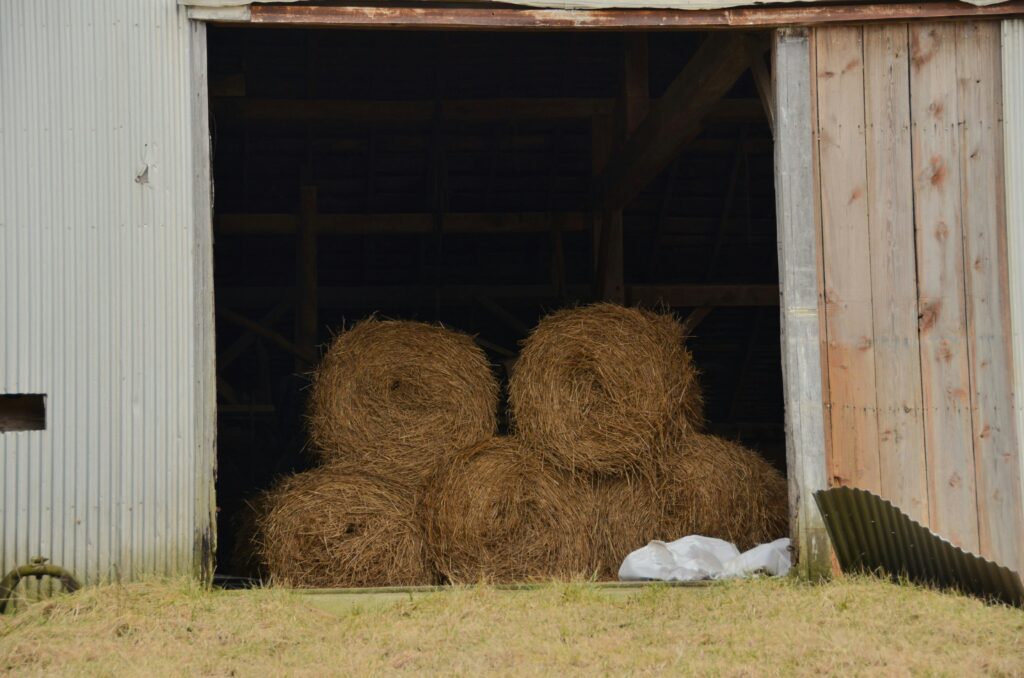
Theoretical feed requirements rarely match actual consumption due to wastage. Cattle and sheep fed hay from unprotected bales waste 20-40% through trampling, contamination, and selective feeding. Proper hay feeders reduce waste to 5-15%. Grain stored improperly suffers losses to moisture, vermin, and spoilage. Realistic cost calculations include wastage factors appropriate to feeding methods and storage conditions.
How to Calculate Daily Animal Feed Costs
Calculating daily feed cost per animal requires three pieces of information: daily feed intake, feed nutritional requirements, and cost per kilogram of feed.
The Basic Formula
Daily Feed Cost per Animal = Daily Feed Intake (kg) × Cost per kg of Feed
This simple formula works when feeding single-ingredient diets or when calculating costs for complete rations where the blended cost per kilogram is known.
Determining Daily Feed Intake
Daily feed intake depends on body weight, production stage, and feed quality. A basic guide for estimating consumption of feedlot animals is to calculate 2.7% to 3.0% of their liveweight (in kilograms) in dry matter.
For beef cattle: A 450-kilogram steer typically consumes 12-14 kilograms of dry matter daily. One 300 kg steer will eat 9–10 kg of feed a day if the ration has an average dry matter of 90%. Intake increases with animal weight and feed quality. Cattle on high-grain feedlot rations consume more (up to 3-4% of body weight) than cattle on lower-quality roughage (2-2.5% of body weight).
For dairy cattle: High-producing dairy cows consume significantly more than beef cattle due to lactation demands. A 600-kilogram dairy cow producing 25 kilograms of milk daily typically consumes 18-22 kilograms of dry matter. Mean pasture dry matter intake (DMI) was 9 kg/cow per day (from 0.1 to 22 kg/cow per day) representing just over half of total DMI on Australian grazing dairy farms.
For sheep: Adult dry sheep consume approximately 2% of body weight in dry matter. Sheep will eat 2–3% of their bodyweight each day, although younger sheep or ewes with lambs can eat up to 4%. A 60-kilogram ewe consumes 1.2-1.8 kilograms of dry matter daily depending on production stage. Pregnant ewes require more energy in late gestation. Lactating ewes with twins have the highest requirements at 4-5.5% of body weight.
For poultry: Feed intake for laying hens reaches a steady level of 100-105 grams per day at maturity. Broiler chicks average 116 grams daily over their growth period, consuming approximately 4.6 kg of feed total to reach 2.8 kg market weight in 42 days. On average, an adult chicken eats about 120 grams of feed per day.
Example Calculations of Animal Feed Costs for Different Livestock
Beef cattle example (300kg steer on pasture plus hay supplementation):
- Body weight: 300 kg
- Daily dry matter intake: 9 kg (3% of body weight)
- Pasture provides: 5 kg DM (estimated during moderate pasture availability)
- Hay supplement required: 4 kg DM
- Hay dry matter content: 88%
- Hay needed (as-fed): 4.5 kg
- Hay cost: Assume current local price per kg
- Daily supplementary feed cost = Hay needed × Local hay price
Dairy cow example (600kg cow producing 22L milk daily):
- Body weight: 600 kg
- Daily dry matter intake: 20 kg (approximately 3.3% of body weight for high production)
- Pasture provides: 9 kg DM
- Silage supplement: 6 kg DM (as-fed: 20 kg at 30% DM)
- Grain supplement: 5 kg DM
- Daily supplementary feed cost = (Silage amount × Silage price) + (Grain amount × Grain price)
Sheep example (60kg ewe with twin lambs, early lactation):
- Body weight: 60 kg
- Daily dry matter intake: 2.7 kg (4.5% of body weight during peak lactation)
- Pasture provides: 1.2 kg DM
- Hay supplement required: 1.5 kg DM
- Hay needed (as-fed): 1.7 kg
- Daily supplementary feed cost = Hay needed × Local hay price
Layer chicken example:
- Daily feed intake: 110 grams (0.11 kg)
- Commercial layer pellets cost: Local price per kg
- Daily feed cost per bird = 0.11 × Pellet price per kg
Broiler chicken example (6-week average):
- Average daily feed intake: 100 grams (0.10 kg) over growth period
- Commercial broiler feed cost: Local price per kg
- Daily feed cost per bird = 0.10 × Feed price per kg
Animal Feed Cost Comparison by Type
Different feeds deliver different nutritional value at different prices. Comparing feeds on a cost-per-megajoule basis reveals true value rather than simply comparing price per kilogram.
| Feed Type | Typical Energy (MJ ME/kg DM) | Relative Cost Category | Advantages | Limitations |
| Good quality pasture | 10-11 | Low | Minimal cash cost, natural grazing behaviour | Seasonal availability, weather dependent |
| Average hay | 8-9 | Moderate | Year-round availability, storage possible | Transport costs, wastage, lower energy than grain |
| Good lucerne hay | 9-10 | Moderate-High | Higher protein than grass hay | Premium pricing, can cause bloat |
| Cereal grain | 12-13 | High | Concentrated energy, consistent quality | Requires gradual introduction, acidosis risk |
| Commercial pellets | 10-12 | High | Balanced nutrition, minimal waste | Highest cost per kg, storage requirements |
| Silage | 10-11 | Moderate | Good energy, preserves nutrition | Fermentation management, DM variation |
To compare feed costs meaningfully, calculate cost per megajoule of metabolisable energy. If wheat grain costs a certain amount per kilogram and contains approximately 13 MJ ME per kg, calculate cost per MJ. Compare this to hay at 8-9 MJ ME per kg at its price point. Often grain appears expensive per kilogram but delivers better value per unit of energy than lower-quality roughage, particularly for high-producing animals.
Seasonal and Regional Adjustments to Animal Feed Costs
Australian livestock production faces distinct seasonal feeding patterns requiring budget adjustments throughout the year.
Dry Season Feeding
During dry periods, pasture quality and quantity decline dramatically. Livestock maintaining condition on pasture alone during green feed periods may require substantial supplementary feeding for 3-6 months annually. In Queensland’s grazing country, dry season feeding from May to November can represent 70-80% of annual feed costs despite being only 7 months. Northern Australia’s tropical zones face even more pronounced wet-dry cycles.
Dry season feeding strategies include conserved fodder (hay, silage), purchased grain, or agistment to areas with remaining feed. Each approach has different cost structures. Hay feeding requires upfront capital for purchase plus daily feeding labour. Grain feeding may cost more per day but requires less storage infrastructure. Agistment avoids direct feed costs but involves transport and agistment fees plus loss of management control.
Wet Season Pasture
Good wet season pasture growth dramatically reduces supplementary feeding requirements for grazing livestock. Beef cattle and dry sheep may require no supplementary feeding for 4-6 months during peak pasture production. However, high-producing animals (dairy cows, lactating ewes) still require supplementation even on excellent pasture. Budget calculations must account for these zero or minimal supplementary feed cost periods when calculating annual costs.
Regional Cost Variations
Feed prices vary significantly by region due to freight costs, local grain production, and demand patterns. Grain-producing regions have lower grain costs than areas requiring long-distance freight. Coastal regions with reliable rainfall may have more affordable hay than arid inland areas. Northern Australia often faces higher feed costs due to freight distances and smaller markets.
Queensland beef producers in western grazing areas face different cost structures than Victorian dairy farmers in high-rainfall zones. New South Wales mixed farmers may produce much of their own feed, reducing cash costs but requiring consideration of opportunity costs. Accurate budgeting requires using local feed prices specific to your region and realistic freight costs for purchased feeds.
Annual Feed Budget per Animal
Calculating annual feed costs provides the information needed for enterprise budgeting and profitability analysis.
Method for Calculating Annual Animal Feed Costs
- Identify distinct feeding periods throughout the year based on pasture availability and production stage
- Calculate daily feed cost for each period using methods described above
- Multiply daily cost by number of days in each period
- Sum all periods to derive annual feed cost per animal
Example: Beef Cattle Annual Feed Budget (Southern Queensland)
Period 1 – Summer/autumn pasture (December-April, 120 days):
- Minimal supplementation required on good pasture
- Lick minerals only
- Cost: Minimal
Period 2 – Dry season feeding (May-September, 150 days):
- 450 kg steers require 4 kg hay DM daily
- Hay cost assumed at regional price
- Daily cost per head = hay amount × local price
- Period cost = Daily cost × 150 days
Period 3 – Spring pasture (October-November, 60 days):
- Reduced supplementation as pasture improves
- Transitional feeding at half dry season rate
- Daily cost = (Period 2 daily cost) / 2
- Period cost = Daily cost × 60 days
Annual total = Sum of all periods
Small Herd vs Large Herd Considerations
Feed costs per animal remain similar regardless of herd size, but total feed costs scale with animal numbers. A small operation with 10 beef cattle may spend several thousand dollars annually on supplementary feed. A 200-head operation faces proportionally larger total costs but may achieve better economies of scale through bulk feed purchasing.
Small operations can rarely justify dedicated feed storage infrastructure, forcing reliance on smaller purchased quantities at higher per-unit costs. Large operations can purchase hay in bulk during production season, store on-farm, and achieve significant savings. Similarly, large operations may economically justify on-farm feed mixing equipment, whilst small farms purchase pre-mixed rations at premium prices.
However, small operations have advantages in grazing management. They can more easily match feed supply to demand through tactical paddock rotation, and may have proportionally more pasture relative to stock numbers, reducing supplementary feeding requirements.
Planning and Monitoring Rather Than Guessing
Effective feed budgeting requires ongoing monitoring, not just annual projections. Weigh animals regularly to track growth rates or condition changes. Record feed purchases and feeding rates. Compare actual consumption to budgeted amounts monthly or quarterly. This discipline reveals problems early – if animals consume significantly more than budgeted, investigate causes such as feed wastage, poor feed quality, or health issues affecting feed conversion.
Maintain records of pasture growth rates and feed-on-hand estimates. Many Australian agricultural departments provide pasture growth rate data for local regions. Compare your observations to these benchmarks to improve feed budgeting accuracy over time.
Tips to Reduce Animal Feed Costs Without Compromising Animal Health
Managing feed costs whilst maintaining animal nutrition requires strategic approaches balancing economy with productivity.
Improve Pasture Quality and Rotational Grazing
Pasture represents the most economical feed for ruminant livestock. Investing in pasture improvement through appropriate species selection, fertilisation, and grazing management reduces supplementary feed requirements substantially. Rotational grazing increases pasture utilisation, reduces wastage, and improves re-growth compared to continuous grazing. Even modest improvements in pasture quality extend the green feed period by weeks, saving substantial supplementary feed costs.
In southern Australia, improving pasture from 8 MJ ME/kg to 10 MJ ME/kg might extend quality grazing by 4-6 weeks annually. For a 50-cow beef herd, this eliminates 30-40 days of hay feeding, saving considerable expense whilst maintaining animal condition.
Strategic Supplementation Based on Production Stage
Not all animals require the same nutrition simultaneously. Dry stock require only maintenance rations. Growing animals and lactating females need higher-quality feed. Grouping animals by nutritional requirement allows targeted supplementation, avoiding wasteful feeding of premium rations to animals with modest requirements.
Pregnant ewes in early-mid gestation require little supplementation if on reasonable pasture. Late gestation and early lactation require concentrated nutrition. Feeding all ewes identically throughout pregnancy wastes feed. Similarly, separating first-calf heifers from mature cows allows appropriate nutrition for their continued growth without overfeeding mature animals.
Feed Storage and Handling to Reduce Waste
Proper hay feeders reduce wastage from 30-40% (unprotected bales) to 5-15% (good feeders). For a beef operation feeding 10 tonnes of hay annually, this represents 1.5-3.5 tonnes saved – substantial cost avoidance. Covered grain storage prevents moisture damage and vermin losses. Silage management preventing spoilage at the face saves tonnes of feed annually in dairy operations.
Feed handling equipment appropriate to scale improves efficiency. For small operations, simple hay feeders and vermin-proof bins suffice. Larger operations may justify mixer wagons, grain handling augurs, and bulk storage achieving significant labour and feed cost savings.
Mix Feed Types for Cost Efficiency
Balancing rations using multiple feed ingredients often achieves nutritional targets at lower cost than feeding single ingredients. Supplementing lower-quality roughage with small amounts of grain or protein meal can meet energy and protein requirements more economically than feeding premium hay alone. Livestock nutritionists can formulate least-cost rations meeting nutritional specifications using available feeds, potentially reducing costs 10-20% compared to intuitive feeding approaches.
Daily Animal Feed Costs Summary by Livestock
| Livestock Type | Typical Body Weight | Daily Feed Intake (DM) | Primary Feed Type | Indicative Daily Cost Range | Notes |
| Beef cattle (growing) | 400 kg | 10-12 kg | Pasture + hay | Variable by supplementation level | Higher during dry season |
| Beef cattle (mature cow) | 550 kg | 11-13 kg | Pasture + hay | Variable by supplementation level | Minimal during good pasture periods |
| Dairy cow (high production) | 600 kg | 18-22 kg | Pasture + silage + grain | Higher than beef due to grain | Consistent year-round |
| Sheep (dry ewe) | 60 kg | 1.2-1.5 kg | Pasture + hay | Low during pasture growth | Increases in late pregnancy/lactation |
| Sheep (ewe with twins) | 60 kg | 2.4-3.0 kg | Pasture + hay/grain | Substantially higher | Peak cost during lactation |
| Layer chicken | 2 kg | 110 g | Commercial pellets | Consistent | Year-round |
| Broiler chicken (average) | Variable | 100-120 g | Commercial feed | Increases with age | 6-9 week production cycle |
Important note: Actual daily costs depend heavily on current local feed prices, which vary by region, season, and market conditions. The table provides a framework for calculation rather than specific cost figures. Always use current local prices when budgeting.
Final Advice and Best Practices
Accurate feed cost calculation provides the foundation for profitable livestock management. Several principles support effective feed budgeting on Australian farms.
Keep regular records of feed intake and cost per animal. Simple spreadsheets or notebooks tracking feed purchases, feeding rates, and animal numbers reveal actual costs versus budgeted amounts. This discipline identifies problems early and improves budgeting accuracy over time. Record wastage rates, actual consumption versus theoretical requirements, and any health or production issues potentially related to nutrition.
Adjust feed strategy seasonally based on pasture availability and animal requirements. Rigid year-round feeding programs waste money feeding unnecessary supplements during good pasture periods or inadequately support animals during feed scarcity. Flexibility within a planned framework optimises feed costs whilst maintaining production.
Compare supplier prices regularly for better budgeting. Feed prices vary between suppliers and change throughout the year. Grain prices follow harvest cycles, with lowest prices during harvest gluts. Hay prices peak during dry years and drop when hay is abundant. Strategic purchasing during favourable periods saves substantial amounts for operations with storage capacity.
Test fodder quality rather than assuming nutritional value. Hay and silage vary dramatically in energy and protein content depending on species, maturity at cutting, and storage conditions. Feed testing costs modestly but prevents expensive errors from feeding inadequate or excessive quantities based on assumed values. A simple hay test might reveal 8 MJ ME/kg rather than assumed 10 MJ ME/kg, requiring 25% more hay to meet animal requirements – critical information for accurate budgeting.
Consider total ownership costs, not just purchase price. The cheapest feed per kilogram may prove expensive per unit of nutrition delivered or create handling and storage problems increasing labour costs. Conversely, premium feeds might deliver better animal performance justifying their cost through improved growth rates or production. Economic analysis requires considering the complete picture.
Engage professional advice for ration formulation on intensive operations. Livestock nutritionists optimize rations balancing nutritional requirements against feed costs, potentially saving thousands of dollars annually on commercial dairy or feedlot operations through least-cost ration formulation. The professional fees typically represent tiny fractions of the potential savings achieved.
Maintain practical, operational perspective avoiding over-complicated calculations that exceed available time and data. Perfect information remains unattainable – reasonable estimates based on verified body weights, realistic intake percentages, and current local prices provide adequate accuracy for farm budgeting. Refine calculations over time as record-keeping improves and confidence in projections increases.
External Resources
- Meat & Livestock Australia (MLA) – Feed calculators and nutrition tools
- NSW Department of Primary Industries – Livestock Nutrition – Feed guides and management information
- Australian Poultry Standards – Feed guidelines for poultry
Disclaimer: This guide provides general educational information about calculating feed costs for livestock. Actual feed requirements, costs, and nutritional strategies vary significantly by location, season, livestock class, and individual farm circumstances. Feed prices change frequently with market conditions. This is not financial, veterinary, or agricultural advice. Always consult qualified livestock nutritionists, veterinarians, and agricultural advisers for feeding recommendations and financial planning specific to your operation

