
Raising hens in your backyard or on your self sufficient land has never been more popular — and with good reason. Whether you’re chasing the unmatched taste of fresh eggs, wanting a natural way to manage food scraps, or just looking to live a little more self-sufficiently, keeping chickens is one of the simplest steps you can take. But the success of any backyard flock starts with one crucial piece of infrastructure: the hen coop.
Getting your hen house setup right isn’t just about comfort or aesthetics. It’s about protecting your birds from weather, predators, and disease — while also staying compliant with local council regulations. In this guide, we’ll break down what a well-designed hen coop looks like in the Australian climate, how much space you’ll need, and what to know before building or buying a chicken coop in your state.
Let’s get you (and your hens) settled in.

Why a Proper Hen Coop Setup Matters
If you’ve never kept chickens before, you might think a simple shed or cage will do the trick. But a good hen coop — also known as a hen house or chicken coop — is more than just a shelter. It plays a direct role in:
- The health and hygiene of your flock
- Their egg-laying consistency
- Safety from foxes, cats, snakes and other predators
- Your ability to meet council regulations (and keep neighbours happy)
Think of the coop as a home base. It’s where your hens sleep, lay eggs, and retreat during bad weather. And just like any good home, it should be designed with care.
How Big Should a Hen Coop Be?
When it comes to space, there’s one rule that almost always applies: more room is better. But there are some standard size guidelines you can follow depending on how many birds you plan to keep.
A general benchmark for backyard coops is:
- Indoor coop space: 0.3 – 0.4 square metres per bird (at minimum)
- Outdoor run space: 0.8 – 1 square metre per bird
So, for a small flock of 4 laying hens (a common starting size in urban areas), you’ll want a coop that provides:
- Around 1.5m² of enclosed sleeping/nesting area
- A run area of 3–4m²
Of course, these are just minimums. If you can provide more space — especially in the run — your hens will be happier, healthier, and less likely to peck each other or suffer from boredom-related issues.
Tip: Urban yards often have vertical potential. Consider a raised coop with a shaded run underneath — it saves space and keeps birds cooler in summer.
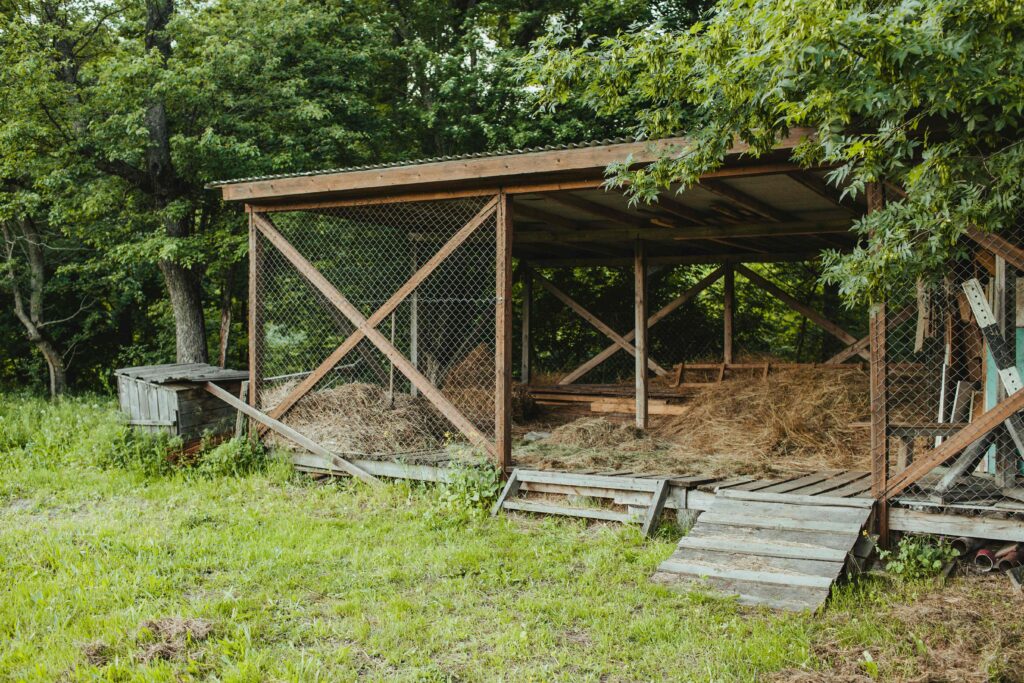
Coop Design Features That Work in the Australian Climate
Australia’s diverse climate means what works in Melbourne might be completely unsuitable for regional Queensland. Still, there are a few must-haves that apply across most areas:
Ventilation
Fresh airflow is non-negotiable, especially in our warmer regions. A well-ventilated coop prevents ammonia build-up (from droppings), reduces moisture, and keeps heat stress at bay. Look for mesh windows or vents — ideally with adjustable covers to help regulate in cooler months.
Shade & Insulation
While hens can tolerate the cold better than extreme heat, high temperatures can quickly turn fatal. A shaded coop and run area (using trees, roofing, or shade cloth) is crucial in most parts of Australia. In colder climates, a bit of wall insulation or draught protection can help maintain a stable overnight temperature.
Predator Protection
Foxes are a threat in both country and suburban areas, and snakes or goannas may also pose a risk depending on where you live. A sturdy, enclosed base, welded mesh (not chicken wire), and latches that can’t be opened by clever paws or claws are essential.
Easy to Clean
Designs with a removable droppings tray, wide doors, or hinged roofs make life easier — especially if you’re collecting eggs daily or doing regular bedding changes. Hygiene plays a big role in disease prevention and egg quality.
Design Considerations for Small Acreage and Semi-Rural Setups
If you’ve got a bit more room to work with — a few acres or a small paddock — your options for hen coop design naturally expand. This is where you can move beyond basic backyards and start thinking in terms of flocks that serve a real self-sufficiency purpose: fresh eggs, natural pest control, manure for the garden, or even a small egg-selling side hustle.
Here’s how your coop needs shift with more space and bigger goals:
Mobile Coops (Chicken Tractors)
These are especially popular for regenerative or rotational farming models. Mobile hen houses — often called chicken tractors — are lightweight, moveable structures that allow you to rotate your birds across pasture. This helps spread manure evenly, reduces worm burden in the soil, and gives your flock access to fresh grass and insects daily.
In open paddock settings, a chicken tractor can also reduce feed costs and boost egg quality. Just make sure it’s fox-proof and weather-resistant. Designs with mesh flooring, lightweight corrugated roofing, and side ventilation work well in most Australian conditions.
Planning to build one yourself? Use treated timber or weatherproof ply for longevity, and choose a mesh gauge heavy enough to keep out predators — standard chicken wire won’t cut it.
Fixed Coops with Rotational Runs
For those wanting to keep the coop in place but still give birds access to different patches of ground, a fixed hen house with multiple fenced runs can work well. You simply open different gates each week, allowing the previous area to rest and recover while the next one gets foraged.
This method is particularly useful on sloped land, or where you’re also managing garden beds, small orchards or other elements of a permaculture system.
Room for Flock Expansion
One of the most common mistakes new keepers make — especially when they’re building on acreage — is underestimating how quickly their flock might grow. A coop built for four birds today might need to support twelve next spring.
Whether you’re building or buying, look for modular designs or allow for additional roosting bars and nesting boxes from the beginning. Adding extra ventilation, doors or perch space later can be much more difficult than planning for it upfront.
Nesting Boxes, Roosts & Internal Layout
Regardless of scale, the internal structure of your hen house matters just as much as the square meterage.
Here’s what to include:
Nesting Boxes
- You’ll need 1 nesting box for every 3–4 hens
- They should be raised off the ground but lower than the roosts (to prevent night-time roosting in them)
- A little privacy helps: enclose them on three sides with a sloped roof to stop perching
- Line with straw or wood shavings and keep eggs collected daily to reduce broody behaviour or breakage
Perches/Roosts
- Hens like to sleep off the ground — ideally 30–60cm high, depending on breed and mobility
- Aim for 20–30cm of perch space per bird
- Use rounded timber about 5cm wide to mimic the feel of a branch, and smooth out any splinters
Flooring
Dirt floors are fine in low-rainfall areas if the coop is raised and stays dry, but most setups benefit from sealed timber or wire bases that allow for deep litter or easy hosing. Deep litter methods using straw, wood shavings or sugar cane mulch can reduce odour, build soil, and reduce cleaning frequency when done properly.
Planning tip: Build your coop so you can comfortably access every corner. You’ll be glad you did during rainy weeks or when it’s time to clean.
Local Council Regulations and State-Based Guidelines
Whether you’re in suburban Melbourne or on a 10-acre property in regional Queensland, understanding your local council regulations is essential. Chicken coops — even small ones — fall under residential and agricultural planning codes, and these vary significantly depending on where you live.
Here’s a breakdown of common legal considerations and how they apply across different environments in Australia:
Urban and Suburban Areas
In most metropolitan councils, keeping hens (no roosters) is permitted, but the rules tend to focus on:
- Flock size limits (typically 4–10 birds per property)
- Minimum distance from fences and dwellings (e.g. 1–3 metres from property boundaries)
- Prohibited structures (roosters, large poultry sheds, or buildings over a certain height may require permits)
- Noise and odour management (you may be asked to relocate or modify your setup if neighbours complain)
There may be some variations depending on your specific location/area, so it pays to check with your local council. For example, in Sydney’s Inner West, the council allows up to 5 hens on a residential lot, with coops requiring proper ventilation, vermin-proofing, and setback distances of 3m from any neighbouring dwelling – but this may not be the same in a more regional setting.
Tip: Even if chickens are allowed, always check the development control plan (DCP) on your council website before investing in a coop.
Rural Residential and Small Acreage Properties
If your land is zoned RU2, RU4, or R5 (common zoning categories for lifestyle blocks and peri-urban acreages), you’ll generally have more freedom. Most councils consider poultry as an “exempt development” if the structures are small, non-commercial, and meet standard guidelines for environmental impact.
You may still need to:
- Maintain buffers from waterways or dams
- Ensure sheds are under a certain square metre size (e.g. under 20m² may not require formal approval)
- Prevent nutrient runoff or odour impacting neighbouring land
Similar to what was noted earlier, by example of this type of property, in the Moreton Bay Region of Queensland, properties over 2,000m² can keep up to 20 birds without a licence, as long as housing is hygienic and located at least 10m from any dwelling not owned by the bird keeper.
Permits and Commercial Considerations
If your coop is part of a broader self-sufficiency setup — or you’re planning to sell eggs at a market, farmgate or even online — there are additional steps to consider.
Depending on the scale and location, you may need:
- A Development Application (DA) for any permanent structures
- A Biosecurity Management Plan if keeping large numbers or planning to sell produce
- Registration as a Primary Producer with the ATO (if you’re earning income)
You’ll also need to comply with egg labelling and handling laws, which vary slightly by state but generally include safe storage, use-by dates, and flock traceability for food safety.
Thinking bigger? The line between backyard hobby and micro-farming can blur quickly. Always check with your local Department of Primary Industries or Local Land Services office if you’re scaling up.
Building a Hen Coop for Australia: Weather, Wildlife & Wear
Australia isn’t easy on timber or tin — and your hen coop needs to stand up to more than just the occasional shower. From relentless sun to wild storms, foxes to goannas, a well-built coop is one that considers both the elements and the environment.
Climate Considerations
In hot zones (e.g. inland NSW, QLD, NT), ventilation is key. A poorly ventilated coop in the middle of January can become a death trap. Opt for:
- Cross-ventilation designs with wire mesh windows (covered with flyscreen or hardware cloth)
- Insulated roofing or reflective shade cloth
- Raised floors to allow air circulation underneath
- Shaded areas (natural or artificial) where hens can retreat during the heat of the day
In cooler or wet regions (e.g. VIC highlands, TAS, southern WA), insulation and drainage are more important:
- Use corrugated iron or polycarbonate roofing pitched to direct rainwater away
- Install gutter systems to collect rainwater for your flock
- Avoid coops sitting flat on the ground — raised bases help prevent dampness and rot
Tip: Concrete floors can be effective for hygiene and rodent control in cooler climates but may need rubber mats or deep litter bedding to insulate against the cold.
Material Matters
While many commercially sold coops are made from pine or treated timber, not all are created equal. If you’re building your own or upgrading, consider:
- Hardwood framing (e.g. spotted gum or ironbark) for better longevity
- Galvanised wire mesh (not chicken wire) for all openings — it’s stronger, and resists rust
- UV-resistant roofing sheets, especially in sun-heavy zones
- Non-toxic sealants and paints, especially inside nesting boxes
A well-constructed coop, even at small scale, can last over a decade with proper maintenance.
Predator-Proofing
Whether you’re dealing with urban foxes or country goannas, protecting your hens is non-negotiable. Australia’s predators are persistent — and surprisingly clever.
To keep your hens safe:
- Bury fencing mesh at least 30cm underground around the perimeter to deter diggers
- Secure all openings (vents, nest box lids, doors) with predator-proof latches
- Use motion sensor lights or electric fencing if foxes are a known issue
- Close the coop each night — automatic door closers can be a handy investment
True story: In many outer suburbs, foxes will dig under coops or tear through chicken wire. Galvanised mesh (19mm, 1.2mm thick) and a solid foundation are your best line of defence.
Final Thoughts
A hen coop is more than a box with a roof — it’s the cornerstone of a self-sufficient system. Whether you’re aiming for weekend eggs, a small enterprise, or just a deeper connection with where your food comes from, investing the time in a smart setup will repay itself for years to come.
By thinking beyond the backyard — and tailoring your coop to Australia’s unique climate, regulations, and natural threats — you’ll give your hens a safe, healthy home. And you’ll give yourself peace of mind.

