Berry farming in Australia has grown into a $1.3 billion industry, with production values steadily rising over the past decade. Small farmers, lifestyle block owners, and rural property buyers increasingly view berries as high-value crops suited to limited acreage. However, profitability varies dramatically between berry types based on yield, labour requirements, climate suitability, and market prices. This comprehensive comparison examines blueberries, strawberries, raspberries, and blackberries to help you determine which berry offers the best returns for your Australian property. We’ll analyse real production data, price ranges, start-up costs, and regional considerations to guide your decision.
Note: All figures reflect 2023-2024 Australian industry data and current market conditions. Profitability depends heavily on location, growing methods, marketing approach, and management skill.
Key Factors That Affect Profit in Berry Farming
Understanding what drives profitability helps you make informed decisions about which berry to grow.
Yield per Plant and per Hectare
Production volume directly impacts revenue potential. Berries differ substantially in output per plant and per hectare.
In southern Australia, blueberry farms typically plant 2,000-2,100 plants per hectare, with each mature plant producing 8-10 kg of fruit annually. Northern NSW operations use higher planting densities of 3,700 plants per hectare, with mature plants producing average yields of 4 kg per season. Full blueberry production doesn’t occur until year five, requiring patient investment.
Strawberry producers achieve 59-62 tonnes per hectare with as many as 54,000 plants per hectare. This extremely high planting density and rapid cropping cycle make strawberries the highest-yielding berry per unit area.
Raspberries and blackberries produce moderate yields but exact Australian per-hectare figures vary significantly by variety, climate, and management system. Industry data shows raspberry and blackberry production (combined as “rubus berries”) totalled 13,386 tonnes nationally in 2023-24, representing substantial but lower volumes than strawberries or blueberries.
Labour Requirements
Labour represents the largest variable cost in berry farming and varies dramatically by crop.
Harvesting intensity
All berries require hand-picking, but frequency and difficulty differ. Strawberries ripen quickly and need picking every 2-3 days during peak season. Raspberries are extremely fragile and require gentle handling, increasing picking time per kilogram. Blueberries are more robust and can tolerate slightly rougher handling, making harvesting more efficient. Blackberries are the toughest berries, withstanding handling better than other types.
Pruning and training
Raspberries demand intensive annual pruning and cane management. Blackberries require similar but less frequent pruning. Blueberries need ongoing maintenance throughout the growing cycle. Strawberries grown as annuals require complete replanting but minimal pruning during the growing season.
Trellising systems
Raspberries and blackberries require substantial trellising infrastructure with regular maintenance. Blueberries may use support systems but often grow as freestanding bushes. Strawberries grown in raised beds or substrate systems need structural support but less complex trellising than cane berries.
Market Price
Berry prices fluctuate seasonally but show distinct patterns by type.
Wholesale vs retail pricing
Blueberry trays (1.5 kg containing 12 punnets) range from $60 early in season down to $20, with average prices around $30/tray in southern Australia and $35/tray in northern NSW. Wholesale market data from Sydney Markets shows blueberries at $1.50-$5 per punnet, raspberries at $3-$6 per punnet, blackberries at $3-$5 per punnet, and strawberries at $2-$6 per punnet.
Retail prices can spike significantly during supply gaps, with blueberries reaching $20 per punnet in remote locations and $9.50-$16 in metro areas during transitional growing periods. These price variations create opportunities for growers who can fill supply gaps through controlled-environment production or strategic variety selection.
Seasonal demand patterns
Australian berry industry production values for 2023-24 show blueberries contributing $505.1 million, strawberries $507.5 million, and rubus berries (raspberries and blackberries) $290.3 million. These figures reflect both volume and price, indicating strong consumer demand across all berry types.
The 2023-24 period saw “easing prices for blueberries and strawberries compared to previous years” as production volumes reached record highs, demonstrating how increased supply affects profitability.
Climate Suitability for Berry Farming
Matching berry type to your property’s climate is essential for success.
Cool climate berries
Raspberries perform best in cool to mild climates. Hot temperatures damage fruit quality and reduce yields. Tasmania and cool areas of Victoria produce premium raspberries. Blueberries tolerate warmer conditions than raspberries but still prefer moderate summer temperatures. Production of blueberries and rubus berries occurs in two farming systems: polyhouses & tunnels (60% for blueberries) and conventional (40%). Protected cultivation extends suitable growing regions.
Warm climate berries
Strawberries adapt to warm Australian conditions well, with production occurring in most states year-round. Queensland’s subtropical climate supports extended strawberry seasons. Blackberries tolerate heat better than raspberries, making them suitable for hot inland areas where raspberries struggle.
Frost and rainfall considerations
All berries risk frost damage during flowering. Spring frost protection may be necessary in frost-prone areas. Heavy rain during fruiting causes quality issues, particularly for soft berries like raspberries and strawberries. Covered production systems solve these problems but increase establishment costs.
Berry Farming Start-up Costs
Initial investment varies significantly by berry type and production system.
Plant costs
Blueberry plants cost $8-15 each, with 2,000-3,700 plants per hectare required. Plant costs alone reach $16,000-55,500 per hectare. Strawberry runners or plugs cost $0.30-0.80 each, but with 54,000 plants per hectare, total plant costs reach $16,200-43,200 per hectare. Raspberry and blackberry canes cost $5-12 each with 4,000-8,000 plants per hectare, totalling $20,000-96,000 per hectare depending on variety and density.
Infrastructure requirements
Blueberry operations require permanent drip irrigation, total bird exclusion netting, and weed management systems. Netting costs alone reach significant amounts per hectare. Strawberries need substrate systems or raised beds, irrigation, and often shade or tunnel structures. Raspberry and blackberry operations require substantial trellising with posts, wires, and anchors every few metres.
Blueberries require 3-5 ML per hectare of water annually, necessitating adequate water access and storage.
Time to production
Strawberries produce within 12-16 weeks of planting, providing the fastest return. Raspberries produce some fruit in year one with full production by year two. Blackberries follow similar timelines. Blueberries don’t reach full production until year five, though some fruit appears from year two. This extended establishment period affects cash flow and requires longer-term planning.
Blueberry Farming Profitability
Blueberries represent the highest-value berry in the Australian market by total industry value.
Yield
Southern Australian blueberry farms with 2,000-2,100 plants per hectare achieve 8-10 kg per plant when mature, producing 16,000-21,000 kg per hectare. Northern NSW operations with 3,700 plants per hectare producing 4 kg per plant generate 14,800 kg per hectare.
Australia produced 27,540 tonnes of blueberries in 2023-24, demonstrating substantial national production.
Blueberries pack into 125g punnets (with 140g to allow for shrinkage). This produces approximately 8-10 punnets per tray (1.5 kg). A hectare yielding 16,000-21,000 kg generates 10,667-14,000 trays.
Price Range
Tray prices range from $60 early season to $20 late season, averaging $30-35 per tray. At average pricing, gross revenue per hectare reaches $320,000-490,000 before expenses.
Retail prices during supply gaps can reach $9.50-$20 per punnet, creating premium pricing opportunities for growers who can produce during off-peak periods through variety selection or protected cropping.
Pros
Strong consumer demand drives consistent sales. Blueberries contributed $505.1 million to Australian berry production value in 2023-24, the highest dollar value of any single berry type.
Blueberries have relatively long shelf life compared to raspberries or strawberries, reducing waste and allowing wider distribution. Premium pricing remains stable with less dramatic seasonal variation than strawberries.
Sixty percent of Australian blueberry production occurs under polyhouses and tunnels, allowing year-round production and protection from weather extremes. This extends marketing windows and improves fruit quality.
Cons
Blueberries require acidic soil (pH 4.5-5.5), necessitating soil amendment in most Australian locations. This increases establishment costs and requires ongoing soil management.
Full production doesn’t occur until year five, creating extended cash flow challenges during establishment. High initial costs for plants, netting, irrigation, and soil preparation reach $80,000-150,000+ per hectare before the first significant harvest.
Recent production volume increases have caused “easing prices for blueberries compared to previous years”, indicating market sensitivity to oversupply.
Profitability Summary
Blueberries often achieve the highest profitability per hectare among berries in established, well-managed operations. Gross revenue of $320,000-490,000 per hectare at full production provides substantial income potential. However, high establishment costs, delayed returns, and specialised soil requirements make blueberries best suited to growers with adequate capital, patience, and technical knowledge.

Strawberry Farming Profitability
Strawberries generate the highest production volumes and offer rapid returns.
Yield
Australian strawberry producers achieve 59-62 tonnes per hectare with up to 54,000 plants per hectare. Australia produced 80,741 tonnes of strawberries in 2023-24, nearly three times blueberry production volumes.
This exceptional yield per hectare makes strawberries the most productive berry crop by volume. However, higher volumes don’t always translate to higher profitability due to lower per-kilogram prices and higher labour costs.
Price Range
Wholesale strawberry prices range from $2-$6 per punnet depending on quality and season. Prices spike during winter supply gaps and drop during peak southern production (November-February).
At 250g per punnet, a 60-tonne per hectare crop generates 240,000 punnets. At average wholesale prices of $3-4 per punnet, gross revenue reaches $720,000-960,000 per hectare. However, these figures don’t account for substantial picking costs and higher waste rates.
Strawberry prices were around $6 per punnet during 2024 supply gaps, with expectations of further increases during transitional periods.
Pros
Fast cropping cycle provides income within 12-16 weeks of planting. Lower initial plant costs compared to blueberries or raspberries reduce establishment expenses. Annual varieties allow variety changes each season, adapting to market preferences and disease issues.
Strawberries contributed $507.5 million to Australian berry production value in 2023-24, matching blueberries despite lower per-kilogram prices due to exceptional volumes.
Strawberries suit warm Australian climates well. Production occurs in most states with year-round availability. This adaptability allows strawberry farming across diverse regions.
Cons
Extremely short shelf life creates marketing challenges. Fruit must reach consumers within days of harvest. This limits distribution options and increases waste risk.
Very high labour costs due to frequent picking (every 2-3 days) throughout the season. A 60-tonne crop requires harvesting 240,000 individual punnets, demanding substantial picker coordination and management.
Disease pressure is high, particularly from soil-borne pathogens. Many commercial operations use substrate systems (growing in coir or perlite) rather than soil to manage disease, adding establishment costs.
Recent “easing prices for strawberries compared to previous years” due to increased production volumes affects profitability.
Profitability Summary
Strawberries generate strong returns when labour is available and well-managed. U-pick operations or direct farm-gate sales that eliminate picking labour costs often achieve the best profitability. Commercial operations selling wholesale face tighter margins due to high picking costs and price volatility. Best suited to growers near metro markets with reliable labour access and strong direct-marketing channels.
Raspberry Farming Profitability
Raspberries command the highest per-kilogram prices but demand intensive management.
Yield
Raspberry yields vary substantially by variety and climate. Summer-bearing varieties produce single crops of 3-6 tonnes per hectare. Autumn-bearing (primocane) varieties yield 5-10 tonnes per hectare depending on climate and management.
Rubus berries (raspberries and blackberries combined) produced 13,386 tonnes nationally in 2023-24. Raspberries account for 75% of rubus berry production, with blackberries comprising 25%, suggesting approximately 10,000 tonnes of raspberry production nationally.
Premium raspberries pack into 125-150g punnets. A 7-tonne per hectare crop generates approximately 50,000 punnets.
Price Range
Wholesale raspberry prices range from $3-$6 per punnet, substantially higher than strawberries on a per-weight basis. Retail prices often reach $8-12 per punnet for premium fruit.
At average wholesale prices of $4-5 per punnet, gross revenue from 50,000 punnets reaches $200,000-250,000 per hectare. While lower than strawberry or blueberry revenue potential, raspberries achieve this with lower planting density and less intensive infrastructure.
Pros
Very high value per punnet creates strong revenue potential from limited area. Raspberries suit small properties where maximising return per square metre matters more than total volume.
Premium product positioning allows direct-to-consumer marketing at exceptional prices. Farmers’ markets, farm-gate sales, and subscription boxes capture the full retail margin.
Growing demand for raspberries drives market growth. Rubus berries contributed $290.3 million to Australian production value in 2023-24.
Cons
Extremely fragile fruit requires careful handling throughout harvest and distribution. Bruised or crushed berries lose all value quickly. This limits distribution options and increases waste.
Heavy annual pruning demands skilled labour. Cane management systems require understanding of fruiting patterns and growth cycles. Inexperienced growers often struggle with yield consistency.
Heat sensitivity limits suitable growing regions. Temperatures above 30°C during fruiting damage fruit quality and reduce yields. This restricts profitable raspberry production to cool climates or requires protected cultivation systems.
Production occurs in two systems: polyhouses & tunnels and conventional growing. Protected systems add substantial establishment costs but enable production in marginal climates.
Profitability Summary
Raspberries achieve high profitability per square metre in cool climates or under protected cultivation. Best suited to small-scale operations (0.5-2 hectares) near premium markets where direct sales capture full retail pricing. Not recommended for hot inland areas without covered growing systems. Growers must accept intensive management demands and shorter marketing windows than other berries.
Blackberry Farming Profitability
Blackberries offer reliable yields with lower input requirements than other berries.
Yield
Blackberry plants produce prolifically once established. Modern thornless varieties yield 8-15 tonnes per hectare depending on variety, climate, and management. Established plantings in favorable conditions can exceed 20 tonnes per hectare.
Blackberries account for approximately 25% of rubus berry production, suggesting around 3,300 tonnes of national blackberry production in 2023-24.
Blackberries pack into 125-150g punnets similar to raspberries. A 10-tonne per hectare crop generates approximately 70,000 punnets.
Price Range
Wholesale blackberry prices range from $3-$5 per punnet, lower than raspberries but more stable throughout the season. Retail prices typically reach $6-8 per punnet.
At average wholesale prices of $3.50-4 per punnet, gross revenue from 70,000 punnets reaches $245,000-280,000 per hectare. This compares favorably with raspberries whilst requiring less intensive management.
Pros
Tough, robust plants tolerate heat better than raspberries, making them suitable for warmer Australian regions. Established blackberry plantings show good drought tolerance compared to other berries.
Long harvest window spreads labour demands. Blackberries ripen over 6-8 weeks rather than the concentrated 4-week raspberry harvest. This makes picking labour management easier.
Lower disease pressure compared to strawberries and reduced heat sensitivity compared to raspberries means fewer crop failures. Reliable yields allow better financial planning.
Fruit holds quality better than raspberries, tolerating handling and transport more successfully. This expands potential market reach.
Cons
Blackberry plants can spread aggressively through suckering. Containment requires vigilant management to prevent plants escaping production areas. Some older seeded varieties are environmental weeds in parts of Australia, though modern thornless cultivars are less invasive.
Thornless varieties command higher plant costs ($8-15 per plant) than thorny types. However, thorny blackberries create picking difficulties that offset plant cost savings.
Lower per-punnet pricing than raspberries reduces revenue potential despite higher yields. Market perception positions blackberries as a more common berry, limiting premium pricing opportunities.
Profitability Summary
Blackberries offer strong profitability with relatively low risk and moderate inputs. Particularly well-suited to hot inland areas where raspberries fail and to growers seeking reliable production without intensive management. Best returns come from direct sales channels where thornless varieties and good fruit quality justify premium pricing. Excellent choice for beginners entering berry production due to plant toughness and manageable labour demands.
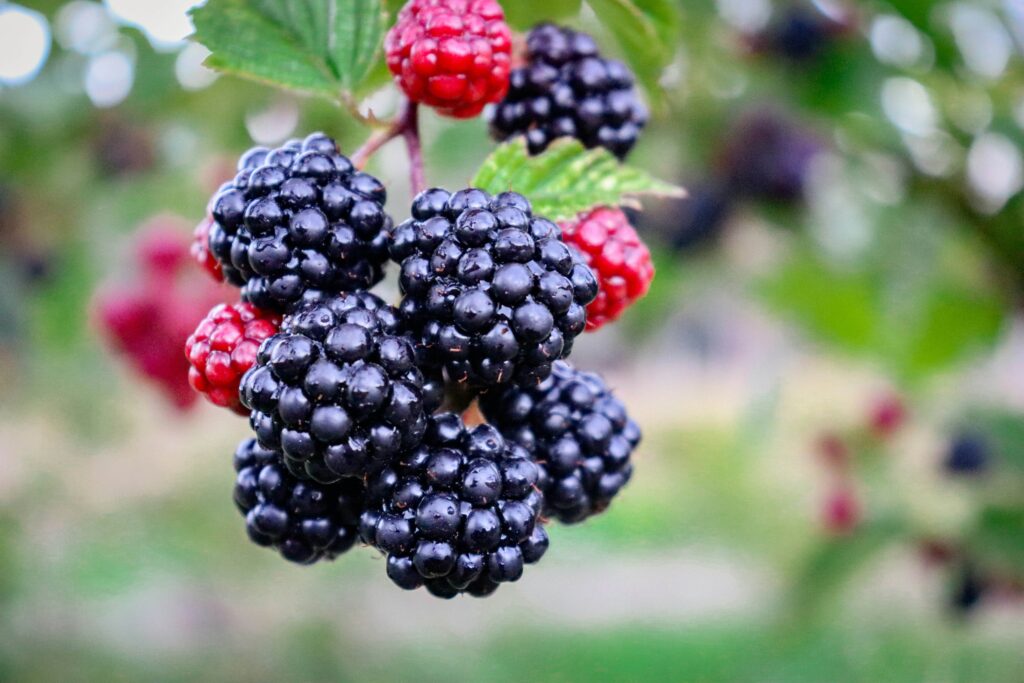
Gooseberries, Currants, and Niche Berries
Market Potential
Gooseberries, currants (red, white, and black), boysenberries, and other niche berries occupy small market segments in Australia. Limited commercial production creates both opportunities and challenges.
Low consumer familiarity restricts mainstream market access. Most Australians don’t regularly buy or cook with gooseberries or currants. However, this creates premium pricing opportunities in specialty markets.
Artisanal producers, farm-gate operations, and value-added processors find success with niche berries. Currants command premium prices for jam-making and specialty preserves. Gooseberries appeal to European migrant communities and adventurous food enthusiasts.
Profitability
Yields typically range from 3-8 tonnes per hectare for currants and 5-12 tonnes per hectare for gooseberries, depending on variety and management.
Limited commercial data exists for Australian niche berry pricing. Retail prices often match or exceed raspberry prices ($6-10 per punnet) due to scarcity. However, finding consistent buyers remains challenging.
Best suited to small plantings (0.1-0.5 hectares) integrated into diversified market garden operations. Multiple specialty crops spread risk while building reputation for unique products.
Profitability depends heavily on developing market connections before planting. Pre-selling harvest quantities to restaurants, farmers’ markets, or food processors reduces risk.

Berry Farming Profitability Comparison
| Berry Type | Yield per Hectare | Start-up Cost per Ha | Labour Intensity | Wholesale Price Range | Years to Full Production | Best Climate | Gross Revenue Potential (per Ha) |
| Blueberries | 14,000-21,000 kg | $80,000-150,000+ | Moderate | $30-35 per 1.5kg tray | 5 years | Cool to warm, acidic soil | $320,000-490,000 |
| Strawberries | 59,000-62,000 kg | $40,000-80,000 | Very High | $2-6 per 250g punnet | <1 year | Warm to hot | $720,000-960,000 |
| Raspberries | 5,000-10,000 kg | $50,000-100,000 | Very High | $3-6 per 125g punnet | 2 years | Cool, protected | $200,000-250,000 |
| Blackberries | 8,000-15,000 kg | $30,000-70,000 | Moderate-High | $3-5 per 150g punnet | 2 years | Warm to hot | $245,000-280,000 |
| Niche Berries | 3,000-12,000 kg | $20,000-50,000 | Moderate | Highly variable | 2-3 years | Varies | $80,000-200,000 |
Note: Gross revenue potential doesn’t account for operating costs including labour, irrigation, fertiliser, pest management, marketing, or overhead. Net profitability typically ranges from 20-50% of gross revenue depending on growing method, market channel, and management efficiency.
Which Berry Farming Is Most Profitable in Australia?
The most profitable berry depends on your specific circumstances, but clear patterns emerge from the data.
For established commercial operations with capital
Blueberries lead Australian berry production value at $505.1 million, indicating strong commercial viability. High gross revenue potential ($320,000-490,000 per hectare) combined with premium pricing and relatively stable markets make blueberries the top choice for well-capitalised growers who can wait five years for full production.
Success requires acidic soil or ability to modify soil chemistry, adequate water (3-5 ML per hectare annually), and investment in bird netting and infrastructure. NSW leads production, accounting for 88% of volumes, suggesting favorable conditions in that state.
For rapid returns and high volume
Strawberries matched blueberries in production value at $507.5 million despite lower per-kilogram prices, demonstrating profitability through volume. Gross revenue potential exceeding $700,000 per hectare makes strawberries attractive when labour is available and affordable.
Best profitability comes from u-pick operations where customers perform harvesting, eliminating the largest cost component. Alternatively, operations with reliable low-cost labour access near metro markets achieve strong returns. Fast cropping cycle allows testing berry farming without long-term commitment.
For premium niche production in cool climates
Raspberries command the highest per-kilogram pricing, making them ideal for small properties where maximising return per square metre matters. Cool Tasmanian, Victorian, and elevated NSW properties suit raspberry production naturally.
Protected cultivation systems (tunnels, shade houses) extend suitable regions but increase costs. Best suited to direct-to-consumer marketing where full retail margin justifies intensive management. Not recommended for beginners or hot-climate locations.
For reliable production in hot climates
Blackberries tolerate heat and drought better than other berries whilst maintaining decent profitability. Gross revenue of $245,000-280,000 per hectare with moderate labour and management requirements makes blackberries accessible to new growers.
Particularly strong choice for inland Queensland, inland NSW, and hot areas of Western Australia where raspberry production fails. Thornless varieties eliminate picking difficulties, improving labor efficiency.
Climate match drives success
Matching berry type to climate is more important than selecting the nominally “most profitable” berry. A raspberry farm in coastal NSW consistently outperforms blueberries in hot inland areas despite blueberries showing higher potential profitability nationally.
Evaluate your property’s temperature extremes, frost frequency, rainfall distribution, and soil characteristics before selecting berry types. Consider protected cultivation if your preferred berry doesn’t match natural conditions, but factor additional costs into profitability projections.
Market access determines practical profitability
Proximity to markets or ability to reach customers directly affects actual returns. Premium berries require short supply chains due to limited shelf life. Operations more than two hours from major markets should prioritise blueberries or blackberries over raspberries or strawberries.
Developing direct marketing channels (farmers’ markets, farm-gate sales, online ordering, restaurant supply) typically improves profitability 30-100% compared to wholesale pricing. Plan marketing strategy before planting.
Tips for Starting a Berry Farm on Small Acreage
Start with one berry type
Focus resources and attention on mastering one crop before diversifying. Learning harvest timing, pest management, and marketing for one berry builds skills that transfer to additional types later. Starting with multiple berry types simultaneously divides attention and increases failure risk.
Choose your first berry based on climate suitability, market access, and available capital rather than theoretical profitability numbers. A well-grown blackberry crop outperforms poorly managed blueberries every time.
Invest in drip irrigation systems
All successful berry operations use drip irrigation. Hand watering doesn’t provide consistent moisture or efficient water use. Blueberries require 3-5 ML per hectare annually, quantities difficult to deliver manually.
Budget $5,000-15,000 per hectare for quality drip systems including filtration, fertigation capacity, and automation. This investment pays back through improved yields, reduced water use, and labor savings within 2-3 years.
Plan direct-to-consumer sales channels
Wholesale berry prices fluctuate significantly and offer limited profit margins after covering harvest labor. Farm-gate sales, farmers’ markets, and online ordering systems capture 2-3 times wholesale prices, dramatically improving profitability.
Develop marketing infrastructure before first harvest. Create social media presence, build email lists, and establish market stall bookings during establishment period. First harvest should have buyers waiting.
Use shade cloth in hot climates
Sixty percent of blueberry production occurs under polyhouses and tunnels, demonstrating the value of environmental control. Shade cloth (30-50% density) reduces heat stress, improves fruit quality, and extends suitable growing regions for heat-sensitive berries.
Budget $10,000-25,000 per hectare for shade house structures or 30-50% shade cloth on post-and-wire systems. Higher-cost tunnel structures ($40,000-80,000 per hectare) provide rain protection alongside shade, reducing disease pressure and extending harvest windows.
Start small and scale gradually
Begin with 0.25-0.5 hectares to develop production and marketing systems. Many small-scale berry growers find 0.5-1 hectare sufficient for strong income when combined with other farm enterprises or off-farm work.
Scaling to 2-4 hectares requires full-time management and additional labour. Only expand after mastering production, establishing reliable markets, and confirming demand exists for increased volumes.For practical guidance on small-farm planning and crop selection, explore Grainshed’s comprehensive resources. Learn about small farm planning strategies for developing profitable agricultural enterprises. Review our market garden economics guides for understanding direct-marketing returns. Discover water use and irrigation systems for efficient berry production. Check our soil improvement techniques for preparing land for berry planting. Explore climate-based crop selection for matching berries to your property.